If-then plans (implementation intentions)
Decide in advance exactly when and where you'll act, so you stop relying on willpower in the moment.
In short
Goals die in the gap between deciding and doing. An if-then plan closes it by handing control to the situation: when the cue shows up, the action is already attached.
Most goals fail in the gap between deciding and doing. You mean to go for a walk, but the moment never quite arrives, or it arrives when you're tired and the "meaning to" has evaporated. An if-then plan closes that gap by deciding the when and where ahead of time, while you're calm and clear.
The format is simple: "If [situation], then I will [action]." If it's 7am, then I put on my runners and walk around the block. If I sit down at my desk, then I write for 25 minutes before I open email. You're pre-loading the decision so the moment doesn't get a vote.
Why it works
This comes from decades of research by psychologist Peter Gollwitzer, and the effect is not small. Across many studies, people who form a specific if-then plan follow through far more often than people who just hold a goal in their heads. The plan hands control to the situation. When the cue shows up, the action is already attached to it, so you skip the internal negotiation where willpower usually loses.
How to build one that holds
Pick a real, concrete cue. "When I feel motivated" is useless, because the feeling is exactly what won't be there. Use something that reliably happens: a time, a place, the end of an existing habit. After I drop the kids at school. When I close my laptop for the day.
Name one specific action. "Eat better" gives the moment nothing to trigger. "If I open the fridge for a snack, then I take the cut fruit on the top shelf first" gives it a script.
Write it down, and plan for the obstacle too. If it's raining and I can't walk outside, then I do the ten-minute video instead. You're not just planning the action. You're planning what happens when the plan meets a bad day.
Decide once, in advance, and you stop spending willpower you don't have in moments you can't predict.
Keep going
 Video
Video
Grit: The Power of Passion and Perseverance
A short, grounded talk about staying in the game, and what grit implies about how to treat failure.
 Book
Book
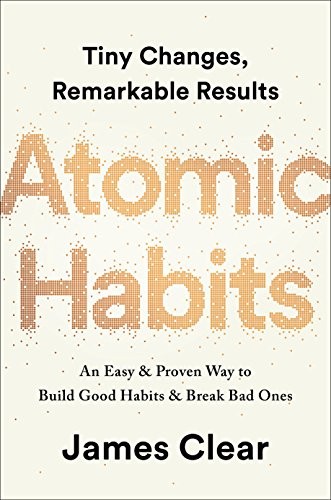
Atomic Habits
The most practical habits book going. Clear's core idea, that you fall to the level of your systems rather than rising …
 Video
Video
Inside the Mind of a Master Procrastinator
The funniest, most accurate map of the procrastinating brain going around, and a sharp point about the goals that have …